

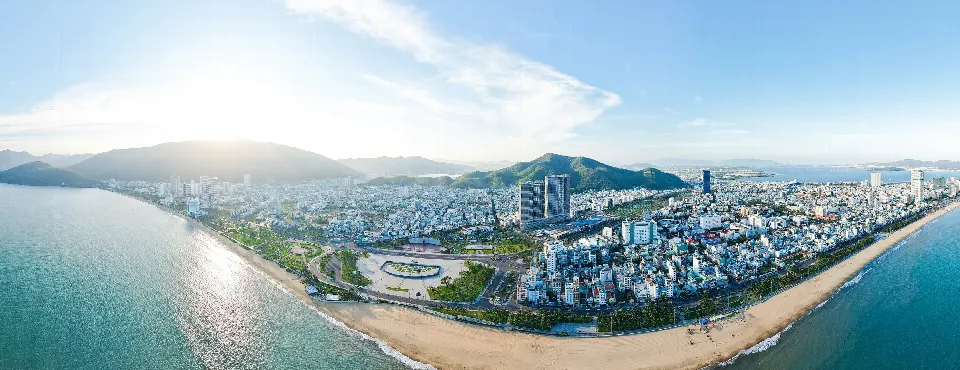
Nationwide, there are only 146,438 condotel units, serving around 70 million guests annually — less than half of actual demand, while Resolution 26-NQ/TW targets 1.5 million accommodation rooms. In Quy Nhon, which just hosted a seminar addressing this shortage, there are only 2 five-star hotels for a market welcoming over 8.7 million visitor arrivals in the first six months of 2026 alone.
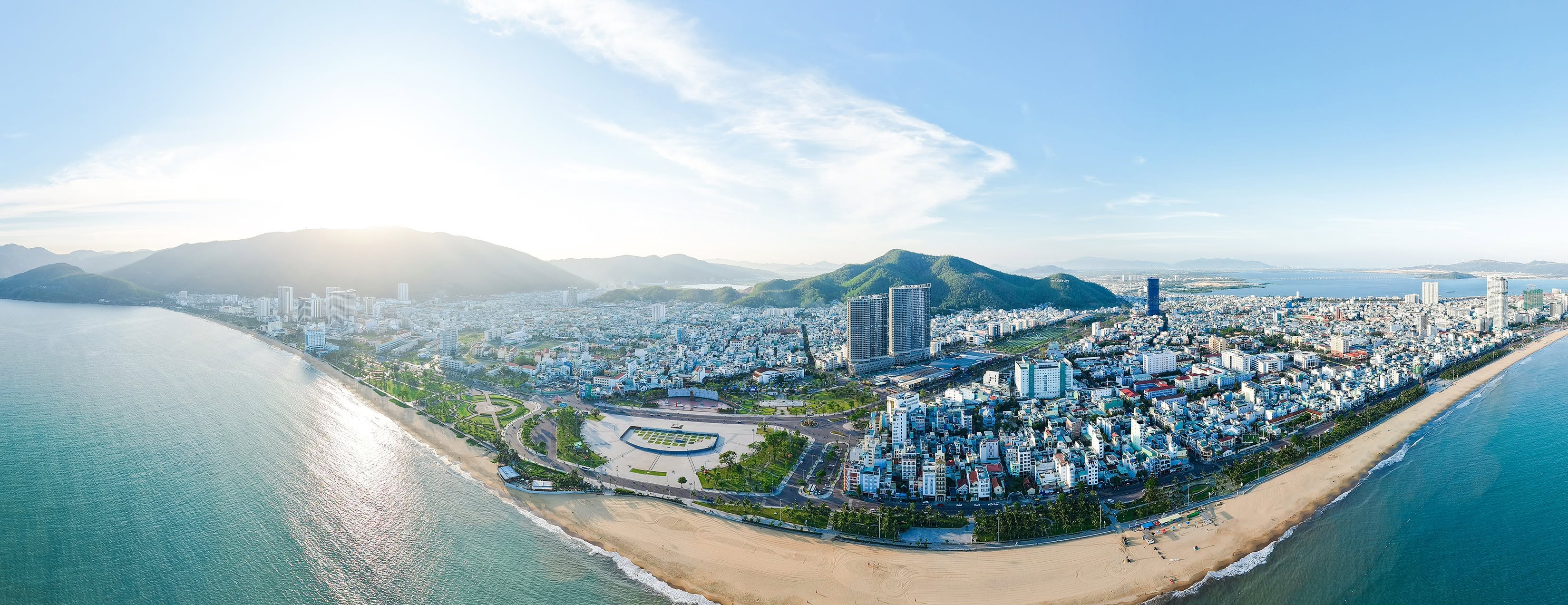
Seminar on tourism real estate held right in Quy Nhon
On October 30, 2026, at FLC Quy Nhon Beach & Golf Resort, the People's Committee of Gia Lai Province partnered with Construction Newspaper and FLC Group to organize the seminar "Tourism Real Estate in the New Cycle: From Legal Framework to Operational Value". The location was no coincidence.
Quy Nhon is where the gap between visitor volume and accommodation room supply is most visible. It is also the market where three large-scale apartment projects are simultaneously launching sales.
Dr. Nguyen Van Dinh, Vice President of the Vietnam National Real Estate Association and President of the Vietnam Association of Realtors (VARS), noted that tourist apartments still have substantial room for growth. The reason: lodging demand is surging faster than the pace of room additions.
From a local perspective, Mr. Le Dang Tuan, Deputy Director of the Gia Lai Department of Construction, stated that the province is focusing on preparing planning frameworks and land reserves, in parallel with improving the investment environment and resolving transportation infrastructure bottlenecks.
Resolution 26-NQ/TW sets target of 1.5 million accommodation rooms
Resolution No. 26-NQ/TW dated August 22, 2026 of the Politburo sets out the orientation to make tourism a spearhead economic sector and a national growth driver. The development direction is defined as high-quality, green, smart, and sustainable.
Regarding regional zoning, the directive identifies three tourism growth poles: Hanoi, Ho Chi Minh City, and Da Nang, while establishing 10 key tourism centers and 20 national tourism areas.
Four core targets of the resolution:
|
Indicator |
Target |
|---|---|
|
Direct contribution to GDP |
10 – 12% |
|
Tourism accommodation rooms |
approximately 1.5 million rooms |
|
International visitors |
45 – 50 million arrivals |
|
Domestic visitors |
160 million arrivals |
According to Dr. Nguyen Van Dinh, Vietnam's tourism resources are evenly distributed across the territory, from the highlands and border regions to the plains. However, the portions currently being tapped remain localized, lacking regional connectivity and delivering modest economic efficiency.
The figure of 1.5 million rooms is the most noteworthy highlight for investors. It quantifies the gap between current accommodation infrastructure and the required level, and that gap represents the exact upside for the tourist apartment segment.
Condotel supply meets less than half of actual demand
According to VARS IRE data cited at the seminar, there are currently 146,438 newly developed condotel units nationwide. This volume accommodates around 70 million guests per year on short-term stays.
That figure meets less than half of actual demand and remains far below the 1.5-million-room target outlined in Resolution 26-NQ/TW.
This imbalance is most pronounced in the high-end segment. The supply of luxury lodging facilities has yet to break out, leading to room shortages occurring with increasing frequency across high-quality tourism destinations. Daily room rental rates have consequently trended steady and risen slightly each year.
Several localities have seen bright spots emerge: tourism urban developments spanning hundreds to thousands of hectares where infrastructure, environment, and residents actively participate in the service ecosystem. Many tourist complexes invest in closed, all-in-one service infrastructure to encourage longer guest stays.
Quy Nhon: where the accommodation challenge is most evident
Following the merger, Quy Nhon belongs to Gia Lai Province and is located in the eastern region of the province—formerly the territory of Binh Dinh. This is where almost all coastal accommodation supply is concentrated.
In the first six months of 2026, Gia Lai welcomed over 8.7 million visitor arrivals, up about 19% year-on-year, generating approximately 19,010 billion VND in total tourism revenue. The province aims to attract around 18.5 million visitors and reach 35,000 billion VND in annual revenue by 2030.
Room occupancy hits the ceiling during every peak holiday
|
2026 Holiday |
Total visitors |
Overnight guests |
Quy Nhon area room occupancy |
Total revenue |
|---|---|---|---|---|
|
848,000 |
117,000 (+25.5%) |
80 – 90%, some hotels fully booked |
900 billion VND |
|
|
945,000 |
148,000 (+40%) |
75 – 80%, many 3–5 star establishments fully booked |
1,600 billion VND |
|
|
513,000 |
127,000 (+32%) |
85 – 95% in the center and along Xuan Dieu, An Duong Vuong corridors |
985 billion VND |
During the September 2 holiday specifically, the final two days were impacted by a tropical depression; otherwise, numbers would have been even higher. Visitor arrivals to Ky Co, Eo Gio, Nhon Ly, Nhon Hai, and Ghenh Rang reached 386,000, up 63%.
Yet the entire market has only two 5-star hotels
This is the crux of the issue. Gia Lai Province as a whole has over 1,200 accommodation establishments with around 23,000 rooms, of which 770 are star-rated, yet there are only 2 five-star hotels and 14 four-star hotels.
In Quy Nhon alone, 2025 statistics recorded about 15 high-quality establishments: 2 five-star hotels with 1,456 rooms and 13 four-star hotels with 1,763 rooms. Occupancy rates for this group routinely reach 90–100% on weekends and remain fully booked for days on end during summer months.
Over 3,200 upscale rooms for a market receiving more than 8.7 million visitors every half year: that is the very definition of a supply bottleneck.
Two catalysts widening opportunities in 2026
First, Gia Lai is hosting National Tourism Year 2026 under the theme "Central Highlands meet the blue ocean" and featuring a series of 244 events running throughout the year. The opening ceremony took place on March 28 at Nguyen Tat Thanh Square, Quy Nhon.
Second, runway No. 2 at Phu Cat Airport, with total investment exceeding 3,200 billion VND, has entered its final push toward commissioning in mid-2026. The 3,048 m runway can accommodate Code C aircraft such as the A320 and A321, with provisions for future upgrades to Code E.
In parallel, the province offers an incentive subsidy of 200 million VND for each international charter flight landing at Phu Cat. This signals clear ambitions to attract international tourists—the group with the longest stays and highest spending.
Three Quy Nhon apartment projects primed to capture lodging demand
Three large-scale apartment projects are simultaneously launching sales in the core center of Quy Nhon, adding approximately 2,800 apartments and 362 hotel rooms to a market that currently offers only over 3,200 upscale rooms.
|
Project |
Location |
Scale |
Property type & ownership |
Listed price from |
Progress |
|---|---|---|---|---|---|
|
28 Le Duan, three street frontages, 150 m from the beach |
2 towers of 36 and 41 floors, 1,341 units, 5-story commercial podium |
Residential apartments, freehold (permanent ownership) |
2.5 billion VND (1BR unit) |
Estimated handover in Q3/2027 |
|
|
145A Tran Hung Dao, two street frontages, 300 m from the beach |
2 towers of 29 floors, 626 luxury units |
Residential apartments, freehold (permanent ownership) |
approx. 2.15 billion VND (1BR unit) |
Latest announced target: Q3/2026 |
|
|
01 Ngo May, central 5-way intersection, facing the square directly |
2 towers of 38–39 floors, 864 tourist apartments and 362 hotel rooms |
Tourist apartments within a 5-star hotel complex |
approx. 1.79 billion VND (32 m² studio) per booking stage listing |
Currently accepting bookings |
The Sailing Quy Nhon: freehold apartments with branded management
The project is developed by Do Thanh Real Estate Investment and Development JSC, legally named I-Tower Quy Nhon Commercial, Service and Apartment Center. The site covers 10,748 m² with three frontages on Le Duan, Vu Bao, and Nguyen Tu streets.
A standout feature for accommodation operations: Tower A is managed under the BW Premier Collection by Best Western brand pursuant to an agreement signed on September 11, 2023. This is a rare structure in Quy Nhon: freehold (permanent ownership) apartments backed by an international brand managing operations.
Sales policy 48/2026, effective October 15, 2026, includes a 3% discount for standard payment progress or 11% for 95% early payment, HDBank loans up to 60% over 35 years with 0% interest support for 15 months. For the first 40 buyers opting for the fully furnished package, the developer guarantees first-year rental income of 15 million VND/month for 2BR units and 18 million VND/month for 3BR units, disbursed as direct vouchers deducted from the contract.
Simona Heights: transforming an old apartment complex into EDGE-certified luxury apartments
The project is developed by Phu My - Quy Nhon Construction Investment Co., Ltd. on the former site of the 08 Tran Binh Trong condominium apartment complex, the very first apartment building in Central Vietnam. The land plot spans approximately 7,071 m², featuring two 29-floor towers, The Sea and The Harbour, comprising 626 units.
Simona Heights is among the few developments in the region awarded the EDGE Green Building Certification by IFC (International Finance Corporation), certifying low energy, material, and water consumption in both construction and operations. For rental-income apartments, low operating costs directly translate to stronger net cash flow.
Featuring Art Deco architecture, two street frontages on Tran Hung Dao and Tran Binh Trong, and located roughly 300 m from the beach. Secondary market pricing currently fluctuates around 37–55 million VND/m² depending on floor and facing (orientation).
Q'Terra: the true 'tourist apartment' product highlighted at the seminar
Among the three developments, Q'Terra is the closest match to the segment analyzed by Dr. Nguyen Van Dinh. The complex at 01 Ngo May encompasses 864 tourist apartments and 362 hotel rooms on a 5,246 m² site.
Those 362 hotel rooms belong to Courtyard by Marriott Quy Nhon, under an agreement between AKYN Hospitality Group and Marriott International. Integrating tourist apartments and an internationally branded hotel within a single property generates powerful synergies in amenities and guest pools, perfectly illustrating the all-in-one model highlighted at the seminar.
The project previously went by Q1 Tower, Cadia Quy Nhon, and Ngo May Courtyard. The developer is Ngo May Real Estate Investment JSC; since 2026, Phat Dat Real Estate Development Corp. has served as the project developer, officially opening its sales gallery on August 21, 2026. The 1/500 detailed master plan was approved on October 17, 2024 via Decision 3612/QD-UBND.
Who will be the end users of tourist apartments?
Dr. Nguyen Van Dinh identified two primary guest segments: international tourists at 30–40 million arrivals, and upscale domestic travelers accounting for roughly 30% of the 160 million annual domestic visitors, equivalent to approximately 40 million arrivals.
Length of stay depends on how well-rounded the local service ecosystem is:
|
Destination characteristics |
Length of stay |
|---|---|
|
Limited services |
1 day |
|
Diverse quality and services |
2 days |
|
Located in a well-invested tourism destination |
over 2 days |
|
Convenient connections to surrounding tourist attractions and regions |
over 3 days |
This is a valuable benchmark when evaluating an apartment project in Quy Nhon. The Quy Nhon – Ky Co – Eo Gio – Nhon Ly – Cu Lao Xanh axis, paired with regional connectivity up to the Central Highlands following the merger, places this market squarely in the final category above.
Regarding destination selection criteria, demand is shifting toward areas featuring sea, forest, mountain, river, and lake ecosystems; healthcare and wellness services; large-scale conference, seminar, and event facilities; indoor and outdoor entertainment amenities; and 24/7 operating services.
Four considerations before committing capital
The outlook shared at the seminar is positive, but investors should carefully examine the other side of the coin.
The recovery milestone is 2028, not today. Dr. Nguyen Van Dinh himself forecasts that the resale market for condotels, shophouses, and villas will show signs of recovery around 2028 as tourism growth picks up strong momentum. This is a two-to-three-year play, not a short-term flip.
Distinguish between residential and tourist apartments. The Sailing and Simona Heights are freehold (permanent ownership) apartments. Q'Terra's legal designation is a high-end commercial, service, and hotel complex, marketed as tourist apartments. Land use form and land lease tenure represent fundamental distinctions; investors must verify directly against the Red Book (land use certificate) and sale and purchase agreement (SPA), rather than relying on promotional materials.
A rental guarantee is only as solid as the guarantor. There are two fundamentally different models. One converts the guarantee into vouchers deducted upfront from the contract, as seen in The Sailing's program—effectively an upfront discount carrying virtually zero risk. The other offers multi-year cash flow commitments entirely reliant on the developer's ongoing financial capacity, and the 2019–2023 condotel cycle clearly demonstrated what happens when that capacity falls short.
85–95% occupancy reflects holiday peaks, not annual averages. The figures cited in this report were recorded during Tet, April 30, and September 2 holidays. The Central Vietnam rainy and storm season from September to December brings occupancy down substantially—just as the recent September 2 holiday was cut short by a tropical depression. Financial models should always run on annual average occupancy, not peak figures.
Another factor often overlooked: roughly 2,800 apartments and 362 hotel rooms from these three projects will enter the market between 2026 and 2028. The rental supply environment then will look entirely different from today, and the advantage will belong to units with prime locations, sea views, and superior operators—not indiscriminately to every unit across the board.